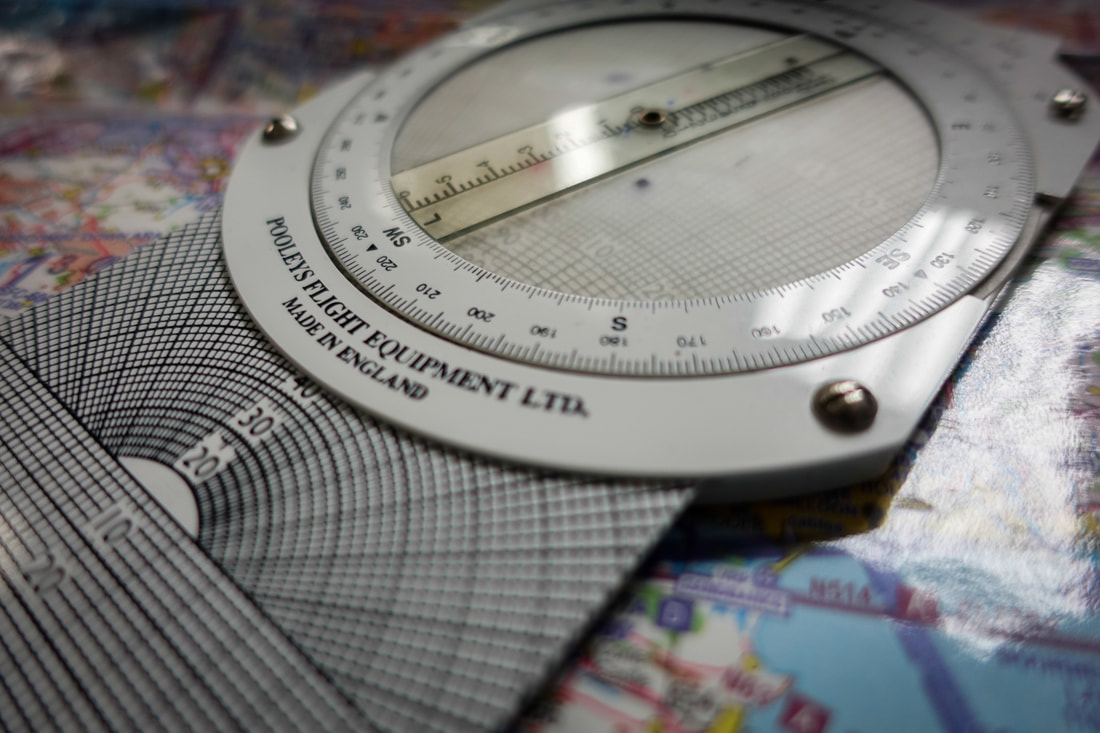
IMC Ground School Approach - visual during lesson.


ppl training uk - in flight navigation with map during lesson


Coventry Flying School - Lesson Aircraft


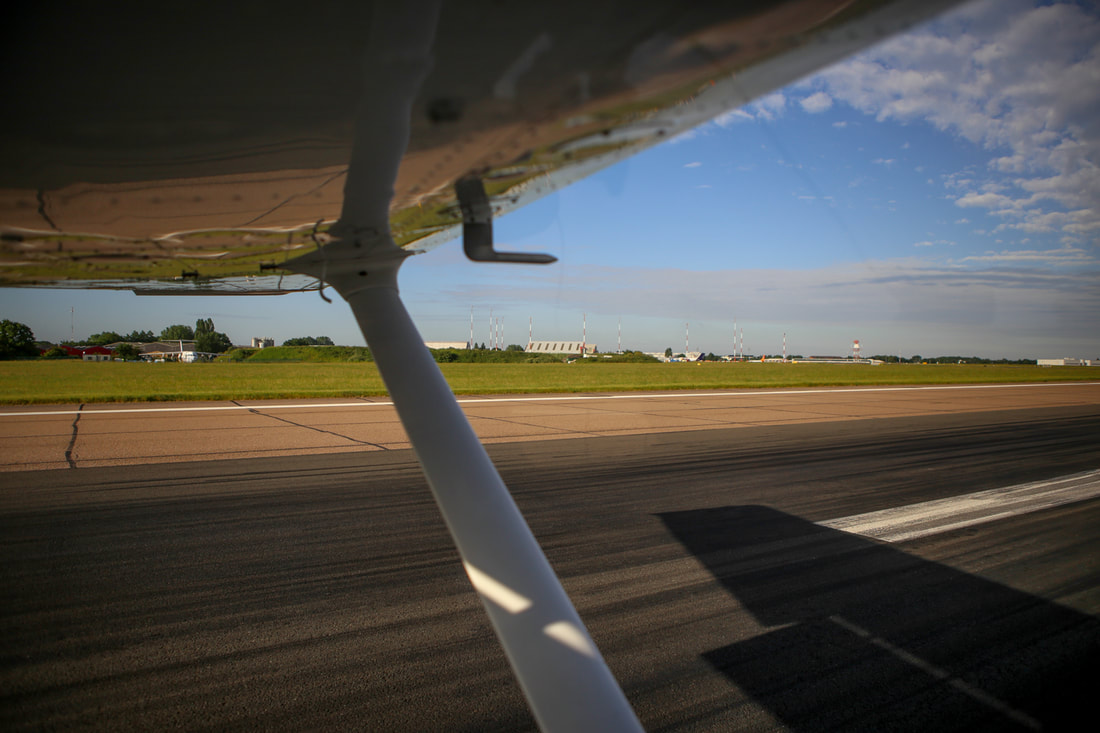
Returning from a Flying Lesson


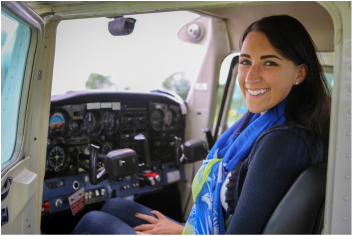
Lesson Aircraft Cockpit


Flying Training Manual

FLYING   LESSONS

Here at Take Flight Aviation we are passionate about flying. All our instructors are seasoned professional pilots ready to pass on their knowledge to you. This combined with all the other club facilities available to you along with our attractive rates make us your first choice for your future in Aviation, be it the start of a an aviation career or simply the best hobby in the world.


JAA PRIVATE PILOT  

                                LICENCE COURSE

PPL Training

Theoretical Knowledge Subjects

  • Air Law - Rules and regulations, rules of the air, ATC regulations, JAR-FCL and JAR-OPS requirements
  • Aeroplane General Knowledge - Airframe, power plant, systems, instruments, airworthiness
  • Flight Performance and Planning - W & B, performance
  • Human Performance and Limitations - Basic physiology, basic psychology, judgement and decision making
  • Meteorology
  • Navigation - map reading including radio navigation
  • Operational Procedures - under VFR, flight safety aspects
  • Principles of Flight
  • Communications - R/T procedures for VFR including failure

Flying Training - the lessons

  • Minimum of 45 hrs flight time of which up to 5 hrs may be in a Flight Navigation Procedures Trainer or approved simulator
  • Minimum 25 hrs dual (to include 2 hrs stall awareness and spin avoidance training) and 10 hrs solo
  • Of the 10 hrs solo, a minimum of 5 hrs cross-country including one cross-country of at least 150 nm with 2 intermediate full-stop landings
  • For night flying an additional 5 hrs night flying with a minimum of 3 hrs dual (including 1 hr of navigation) and 5 solo take-offs and 5 solo full-stop landings

Theoretical Knowledge Examinations

  • 75% pass mark
  • Air Law - 1 hr 30 
  • Aeroplanes General Knowledge, Principles of Flight - 2 hr
  • Flight performance and planning, Navigation, Meteorology, Operational Procedures - 2 hr
  • Human Performance and Limitations - 2 hr

Skill Test

  • Failure of more than one section requires complete retest
  • Failure of only one section requires retest of that section only
  • Any manoeuvre or procedure may be repeated once
  • Examiner may stop test if flying skills inadequate
  • Navigation section must last at least 60 minutes and may be flown as a separate test

Time Limits

  • Theoretical Knowledge Exams must be passed within a period of 12 months with the pass remaining valid for 24 months
  • All exams must be passed before taking your Skills Test

The Skills Test must be undertaken within 6 months of completing flying training and all sections of the test must be completed within 6 months

Buy a Trial Flying Lesson Gift Voucher on Line NOW!

Or book an appointment to come and talk to an instructor, it's free! And you can chat to our other members about the club and our regular social events and study the map to learn about our activities including flying trips (fly-outs in club speak) to destinations both at home and overseas!

In the meantime take a look at our members latest Newsletter here >.to give you a taste of the club.

Meet our team of professional instructors for your flying lessons here >


An Introduction to Flying Lessons

If you haven’t flown a light aircraft before we can offer you an hour's taster to flying lessons when we can explain fully what to expect during your PPL training. Your trial lesson will consist of a preflight brief on how the aeroplane works and how you control it. Your instructor will show you around the outside and inside of the aircraft on the ground and then when you take to the air the instructor will start to teach you the effects of the controls and you will be able to see if learning to fly is for you. At the end of the lesson, we’ll issue you with a certificate, with all the details of your flight, which can be counted towards your total PPL training hours you need to accumulate during your flying lessons.

Take Flight Aviation is a CAA registered training facility and our course the Joint Aviation Authority (JAA) program is divided into two parts. One part concerns the theoretical knowledge to prepare you for the ground exams and the other is the actual flight training.

We can offer training to suit you diary and budget from intensive training over a few weeks to more leisurely training over a couple of years.


The Private Pilots Licence (PPL)

Your flying training will need to consist of a minimum flight time of 45 hours. Of this 45 hours, a minimum of 25 hours will be under dual instruction, and at least 10 hours of solo flying must be carried out including at least 5 hours solo 'cross country' time; this will include a qualifying 'cross country' flight of at least 270 km (150 nm), during which you will land at two aerodromes other than your home airfield

Prior to each flight throughout the course, whether dual or solo, you will have a detailed preflight brief with your flying instructor, who will go through each element of the exercise and map your route. After each flying lesson, there will be a thorough debrief, when you will be encouraged to discuss the flight with your instructor and when he/she will answer any questions you may have.

The early part of your training will be spent in local areas around Wellesbourne, when you will learn how to handle the aeroplane safely. Then follows circuit training, when you learn how to take-off and land the aeroplane. When you have flown your first solo circuit, you will then progress to learning how to navigate your aircraft in preparation for your cross-country solo.

PPL Flight Training Syllabus

 Familiarisation with the aeroplane Emergency drills Preparation for and action after flight Air experience Effects

of controls Taxiing Taxiing emergencies Straight and level flight Climbing Descending Turning Slow flight

Stalling Spin avoidance Take-off and climb to down-wind position Circuit, approach and landing Emergencies

(on take-off/landing) First solo Advanced turning Forced landing without power Precautionary landings Navigation

Basic instrument flight  Navigation at lower levels and reduced visibility Basic instrument flight Radio navigation

Age and Health

Providing you are 14 years old or over, you can log all your flying lessons towards the PPL course, although you must be at least 16 years old to be able to fly solo. The minimum age for the issue of a PPL is 17 years. All pilots must undergo an aviation medical (Class 2 for PPL) conducted by a local CAA authorised medical practitioner. Providing you meet the JAR (Joint Aviation Rules) medical requirements, there is no upper age limit.

Theory Ground Training Syllabus and Exams

Learning how to fly the aeroplane is only one part of the course. There’s the theory too! There are seven exams in total. The subject matter may seem daunting at first but is not difficult especially as it’ done alongside your flying, which makes the theory make sense.

Once you have taken your first written exam, you will need to complete the other six written exams within a 12-month period. However, you do have 24 months from the date of that first pass in which to complete your flight training.

The exams are taken in house at Take Flight Aviation, as we are also a registered ground examination centre.

They cover • Air Law • Human Performance and Limitations • Meteorology • Navigation • Flight Performance and Planning • Aircraft General and Principles of Flight • Radio Telephony

All written examinations are in a multiple-choice format, with a pass mark of 75%. Most students choose to work towards the written exams under a programme of self-study, with books and guidance from their instructor. We can also offer one to one or as demand requires group ground school training for brushing up on those areas where you may need a little help. There is also a practical Radio Telephony exam.

Completing your PPL licence

Once you have completed your flight training and all the written exams, and you have reached a safe and competent standard, your instructor will put you forward for the Skills test the flying equivalent of the driving test.

The Cost

Depending on when and how often you fly and your own skill levels and the amount of ground training you require expect to spend between £5,000 and £8,000. You can opt for a National PPL with a minimum of 32 hours which could save you £1500 - £2,000. Pop and see us for a chat to discuss options.

Maintaining your PPL licence

Once you have your PPL licence and become a full flying member of Take Flight you can really start to enjoy the privileges of your licence and hire a plane for a day or longer from trips in the UK and abroad. To keep your licence valid, you will need to have completed a minimum of 12 hours flying within a 2-year period, with at least 12 hours being flown in the last 12 months of that period. You will also require an hours flying with an instructor every 2 years. You will need to keep your medical current, how often you are examined depends on your age. You may also want to extend your licence to fly at night or in IMC (Instrument Metrological Conditions) again, which can be done in house.

.

  The Midlands Premier Aircraft Hire and Flying Club

Learn to Fly - Midlands Based Flying Lessons School - Take Flight Aviation - Wellesbourne Mountford Airfield  -   Wellesbourne  -  Coventry  -   Warwickshire  -  UK

Continued from Page 1

PPR

With just 48 hours left to run to the flight we contacted each airfield in turn and spoke to the air traffic controllers to obtain prior permission (PPR) to land or touch and go. This proved a worthwhile exercise because even though our landings had all been agreed by airport management or marketing staff that information had not always filtered through to the tower! The USAF at Mildenhall was as efficient as ever and issued us with a PPR reference number, as did Blackpool airport. By the close of play on the 12th we had PPR in place at every airfield, with the exception of Old Warden, Little Gransden and North Weald which required PPR on the day itself. At this stage Adrian Kinsley and James Wiskin at Flightworx Aviation also filed our VFR Flight Plans and customs forms to the Isle of Man and the Flight Plan from the Isle of Man to Doncaster. We also prepared an IFR Flight Plan in case we needed one.

D2D Day Minus 1

Thursday August 13 dawned bright and sunny... a perfect day to go flying... we could only hope that the weather would hang around one more day. Final preparations for the flight began at 08.30 when I dropped my fiancée at work en route to the supermarket. Nia had been very understanding throughout the planning process. She had seen our apartment turned into an aviation haven full of maps, charts and books, yet she had not complained once. She had suffered endless chat about VORs, MSAs, PPR and all manner of acronyms of which she knew nothing about. Now she was bidding me farewell as I departed on what she considered to be a long and potentially risky trip. She smiled in a slightly bemused manner as she waved goodbye, not quite understanding why I was planning to get up at 4am and fly around the country.

I promised to keep her as updated as I could over the next 48 hours but explained that she may have more success if she logged onto my website to see where I was... she smiled again sweetly! With our goodbyes made I set off to pick up supplies for the flight. Past experience has shown that the choice of food one takes on a Dawn to Dusk flight is very important. Food needs to be high in sugar and energy to help sustain you through a long day, but it cannot melt or be messy in any format. Bite sized snacks are ideal as they enable you to eat a mouthful of food quickly – we have discovered in the past that the likelihood of being called on the radio is directly proportionate to the
amount of food you have in your mouth!

Liquid intake is also important. It is vital to remain hydrated during the flight but with some flight legs exceeding three hours ‘comfort breaks’ must be considered! We do carry water on the aeroplane but also fresh and dried fruit as a source of liquid. Sweets such as ‘Jelly Babies’ also provide liquid and sugar. I carry a supply of energy drinks (such as Red Bull) in the aeroplane but Amanda is allergic to caffeine so she does not have the luxury of stimulants to keep her awake and alert. This year we located a new ‘V-Water’ drink which contains a natural stimulant called Ginseng (which Amanda is not allergic to). It also contains vitamin B3 (needed for normal neurological functioning), vitamins B5 and B6 (which promote cognitive support and help you think) and vitamin B12 (which maintains energy and vitality).

This year’s shopping list consisted of:


12 x Breakfast Bars
6 x Bananas
6 x Apples
Dried Fruit (cherry, berries and raisins)
12 x mini scotch eggs
12 x 500ml bottles of water
4 x cans of Red Bull
4 x 500ml bottles of ‘V Water’
4 cartons of apple juice
1 carton of Pringles crisps
1 bag of Jelly Babies
1 Bag of Wine Gums

With the food stashed in a thermally insulated bag it was time to head to the airfield and start final preparations for the flight. Up-to-date PLOGs were printed off along with promotional material to hand to journalists we met at the various press conferences. We included details of the charity along with details of Take Flight Aviation’s aircraft as well as background information on the team, the Dawn to Dusk contest and the theme. Take Flight’s Bob Shuttleworth and his son Oliver were on hand throughout the day to help and by mid afternoon Oliver had polished G-BYSP to a deep sheen. Bob applied the Take Flight Aviation logo to the nose and at 17.00 Amanda and I taxied the aeroplane to the pumps asking the refuellers to fill her “to the gunnels.” This took just over 30 litres and the cost (£45.53) was added to the Take Flight account.

Air Test

Although Amanda and I have a lot of combined time on various PA-28 aircraft – including the Cherokee 180 – we felt it prudent to take ‘Sierra Papa’ aloft for a quick circuit in the evening light. We took the opportunity to test the short take off and landing (STOL) performance as we knew we had some short grass strips on the following day’s itinerary – and much to our delight ‘SP handled impeccably. We departed Wellesbourne at 17.20 and shut down at 17.40 having flown a circuit each.

After I had made a ‘hash’ of parking the aeroplane in the tight spot outside Take Flight we adjourned to the club house to carry on with our preparations! First off was a telephone conference with John Baker and Adrian Kinsley, who were now ensconced in the Flightworx Ops Room at Earls Colne. We ran through the route one final time, detailing the various ATC units that we planned to call en route. John noted these down so that he could telephone ahead to inform the controllers of our impending arrival. The latest weather TAFs and METARs were discussed as were our parking and refuelling arrangements at our various top offs. By now Amanda and I, as well as John, were all receiving a large number of calls from journalists and it was quite difficult to concentrate on the task at hand – so we decided to ignore all nonessential calls until after the briefing.

At this time Guy Stockley joined the discussions by emailing through his synopsis of the NOTAMs. His location ‘somewhere in Afghanistan’ meant he was unable to join us on the telephone but he was in e-mail contact throughout the evening. We later checked through NOTAMs in full, for peace of mind, but as per Guy’s synopsis there was little to affect us. I also took the opportunity to telephone Ed Swain, my contact on the Isle of Man, and the person instrumental in obtaining permission to visit the airport. We had planned to make landfall at the Maughold Lighthouse... but I didn’t know how to pronounce it! Not wanting to make a fool of myself of the radio I called Ed, who flies a PA-28 on the island, and asked his advice. It transpired that it is pronounced ‘Mach-Hold’... so I’m glad I asked!

With the telephones set aside to cool down we next turned our attention to ‘SP. We loaded spare oil, life jackets, and Take Flight’s ‘pop-up’ banners for use at press conferences. The media packs were also loaded as well as other ‘non-valuable’ items such as jackets. We figured the more we could do in the daylight the better, as it would be undoubtedly dark when we arrived the following morning.

Last Minute

Amanda and I both live at least an hour from Wellesbourne Mountford aerodrome (in different directions) and didn’t relish the thought of an extra hours commute on top of a long day. We were therefore very grateful to the Charlecote Pheasant hotel, which provided us with free accommodation the night before the flight. The hotel is a beautiful country house set in the village of Charlecote – less than 3 minutes from the airfield. It has 72 bedrooms and free WiFi internet enabled us to continue planning at the hotel whilst waiting for dinner.

Like many organisations the Charlecote Pheasant had never heard of fly2help before this flight but is now a firm supporter of the charity – and they were more than willing to assist our flight by providing free accommodation for the crew.

With the knowledge that eating opportunities the next day would be sparse Amanda and I both enjoyed a big dinner at the hotel to ‘stock up’ on energy. It was only a swift visit to the hotel however as we needed to return to the airfield to continue preparing the aeroplane and printing off the final weather.

After showering and shaving I finally adjourned to bed at 22.30 - although I took the opportunity to plan the first few legs using the spot winds shown on the most up-to-date Form 214 (valid 21.00-03.00UTC on the 13-14/8/09) whilst getting ready for bed. An average 2,000ft wind was judged to be 220°at 10kts and this was entered into the first few PLOGs. I turned off the light at around 23.00 contemplating how well things were going. Indeed, compared to previous Dawn to Dusk entries there had not yet been any massive last minute re-routings to plan for or dramas of any description!

D2D Day

I was awake before the alarm sounded at 03.45 – I have a knack of waking up 5 minutes before the alarm. I often consider not setting the alarm, but I guess ‘Murphy’s Law’ dictates that the day I don’t set it will be the day my body-clock lets me down... and today was not a day for nasty surprises. Thanks to the proximity of the Charlecote Pheasant to the airfield we were able to surface, get dressed and be at the airfield within 15 minutes. The automatic lighting at Take Flight flickered into life at 03.59 as we sheltered our bleary eyes from the glare of the artificial light. Outside it was dark, with about 50% cloud cover at about 3,000ft. The moon was bright but we still needed torches to find our way safely out to Sierra Papa. A heavy due had fallen overnight and the airframe was sodden, so our first job was to wipe down the screen and windows with a cloth. A thorough exterior ‘A’ Check was completed by both of us – using the call and response checklist method – before we climbed aboard for the first time.


“Did you hear that?” Amanda whispered excitedly... “It was a Tawny Owl!” It was nice to know we weren’t alone and a broad smile spread across both of our faces. “Excited yet?” I asked...“You bet!” came the response.

Back in the aircraft our headsets were plugged in and checked, and then flight bags were loaded along with the food and an assortment of cameras and charging equipment. A Portable Locator Beacon (PLB) was also stashed within grasp – as we would be crossing the Irish Sea to the Isle of Man – and life jackets were prepared for donning.

At 04.15 we checked in with the Operations team at Earls Colne. John Baker had positioned himself there the night before and stayed in a local B&B whereas Adrian had drawn the short straw and had been at work since 20.00 on the nightshift. Everything seemed in order so we went for a ‘last chance comfort break’ before locking up Take Flight HQ and waving at the webcam... just in case anybody was suffering from insomnia or was awake enough to be watching at that time of the morning!

It was 04.45 as we walked out to G-BYSP to begin our latest adventure...

There wasn’t a breath of wind at Wellesbourne Mountford as we clambered into our lifejackets (is there a more undignified article of clothing known to mankind?). It was a beautiful morning and on the eastern horizon we saw the first glimpses of sunlight. We latched the door closed at exactly 05.00 and Sierra Papa’s engine fired into life at 05.06.

Sierra Papa is a really lovely aeroplane, she’s clean, comfortable but above all else I noticed how smooth she was. The engine purred as it warmed up on the apron at Wellesbourne. With the interior lights on, as well as the strobes, nav-lights and landing light she must have made
quite a sight on the deserted airfield. Just then a hair ran across the grass in front of us until it reached the extended beam of the landing light. Puzzled, it stopped and stared briefly in our direction. He cocked his head on one side, as if in bewilderment. It was as though he was wondering what on earth we were doing at such an ungodly hour.

Amanda booted up the Airbox GPS and stuck it to the windscreen with the suction cup that had been provided by the manufacturer. She had only taken delivery of the unit the day before and had spent a few moments ‘playing’ with it in the hotel prior to going to sleep the night before, but despite this unfamiliarity she soon had a route planned from Wellesbourne to Halfpenny Green and a magenta line to follow. There was nobody in the tower at Wellesbourne at 05.10 (although we later found out that Frankie the controller – was listening at home whilst cleaning her teeth!) but I made a traffic call as I prepared to open the throttle to taxi.

“Wellesbourne Traffic Good Morning, this is Golf Bravo Yankee Sierra Papa” I called. “We are a PA-28 at Take Flight departing on the Dawn to Dusk Challenge and we’re just taxing to the Echo hold for Runway Three Six.”

“Are you ready m’dear?” I asked, looking at my companion. “Ready to Roll!” was her clipped response.

Rolling

We both tried our brakes as we taxied to the hold and with little or no wind registering on the sock I taxied directly to the hold lines to do our power checks.

“Parking Brake On” Amanda called
“On” I responded
“Power set”
“Twelve hundred and steady”
“Fuel”
“Tanks changed – left tank selected – both showing full”
“Engines Ts & Ps”
“Cool but warming”
“RPM Set Two Thousand”
“Two Thousand”
“Carb Heat”
“Slight drop registered”
“Magnetos”
“Left... Both... Right... Both... all fine”
“Suction”
“Sucking”
“Ammeter”
“Charging”
“Engine Ts & Ps”
“All now in the green”
“RPM Idle”
“Four hundred indicated, nice and smooth!”
“Rest Twelve Hundred”
“Twelve Hundred Steady”
“Trimmers?”
“Set to Take Off”
“Throttle Friction?”
“Finger Tight”
“Mixture?”
“Set Rich”
“Mags?”
“Set to both”
“Master Switch?”
“On”
“Pitot Heat?”
“On”
“Primer?”
“Locked”
“Fuel?”
“On and sufficient”
“Fuel Pump?”
“On”
“Flaps?”
“Stage One selected”
“Instruments?”
“DI aligned, HI erect, compass checked and I have a QFE of one zero one five. Engine Ts & Ps now
firmly in the green”
“Hatches and Harnesses?”
“Good my side – confirm door latched?”
“Door latched and harness secure. Recycle carb heat?”
“Slight drop.”
“Controls Full & Free for Fletch?”
“Full & Free for Fletch!”

The last call is a modification to the standard checklist in memory of a very dear friend Steve ‘Fletch’ Fletcher. Fletch was my photographer at Today’s Pilot magazine and he was killed in a flying accident in the USA earlier this year. It appears as though the ailerons on the aeroplane he was flying in were not connected and the pilot had not performed a ‘full and free’ check prior to departure. Fletch lost his life as the aeroplane crashed on take-off – leaving behind a wife and two young children. “Full and free for Fletch” is my way of remembering a very dear friend and ensuring I never make the same mistake.

Airborne

“Golf Sierra Papa is rolling Runway three six” Amanda called as we opened the throttle and accelerated down Wellesbourne’s 917m runway. It was still fairly dark, despite the sun trying to break through the thickening clouds, and the few cars on the roads had their headlights on full beam. We smiled at each other again and Amanda was visibly ‘bouncing’ in the right hand seat.

The adventure had begun.

My pre-bed reckoning the night before had given me a heading of 307° to reach Wolverhampton’s Halfpenny Green airport. I reckoned we should be there in 19 minutes. As I steered us onto heading Amanda called Birmingham Approach on 118.05 to ask for a Traffic Service and to ask him to open our flight plan.

“Golf Sierra Papa good morning, traffic service you have, squawk seven thousand for the time being. The Birmingham QFE is now one zero one seven. You’re up early?” he enquired, clearly wanting further information.

Amanda read back the information we’d been given, adding “We’re on the Dawn to Dusk competition, we’re aiming to visit 25 airfields between now and 9pm – all for a charity called fly2help!”

“Sounds interesting...” he replied, having clearly heard enough!

We pressed on northwards, around the western edge of the Birmingham CTA at about 2,000ft, and passed Redditch two minutes later than schedule at 05.25. At 05.30 we requested to briefly leave the Birmingham frequency and we made a ‘blind’ call to Halfpenny Green Traffic as we approached the airfield from the south. It was difficult to spot in the early morning gloom but I thought I glimpsed hangar roofs in our eleven o’clock. It corresponded with the GPS reading so we descended down to circuit height and began our approach to runway 34.

G-BYSP touched down at 05.36 – six minutes later than our pre-planned schedule but just two minutes later than the wind adjusted PLOGs. We were happy. The light conditions were still too low for the digital SLR camera to operate but we obtained a dull photograph of Halfpenny Green as we climbed away on a new heading of 345°. We called Birmingham Approach again on 118.05 and he continued providing our Traffic Service.

Halfpenny Green

Halfpenny Green, as the home to many flying schools and parachuting schools, has been home to numerous airshows and fly-ins over the years. Today fly-ins and family days – such as the recent Project Propeller day which saw countless military veterans take to the skies in light aircraft – are commonplace but back in the 1970s ‘proper’ airshows could be found at Halfpenny Green. Taking one such event on August 27, 1972 as an example spectators were treated to displays by the Army Air Corps Blue Eagles (flying Westland Sioux AH1s XT134, XT193, XT206, XT242 and XW192), Avro Anson C.19 VM325, Westland Whirlwind HAR.10 XD163 and de Havilland Dominie XS712. There was also a three-ship of Jet Provost T.4s dubbed the ‘Macaws’ (flying XP558, XR670 and XS180) as well as a little-known Chipmunk team dubbed the ‘Blue Chips.’ The latter flew Chipmunk T.10s WD285, WG316, WG317 and WG348.

However, the town of Wolverhampton traces its airshow routes back much further, way back to June 1910 in fact. The first flying meeting of the year – and thus the third flying meeting ever held in Great Britain – was organised by the Midland Aero Club at Dunstall racecourse near
Wolverhampton. This meeting was open solely to British airmen and attracted 19 entrants, although three didn’t make it through the preliminary trials.

The majority of entrants came from the flying clubs and privateers from Brooklands as well as a few from Eastchurch. Charles Rolls and Claude Grahame-White were among the competitors however Sam Cody was notable by his absence. He was recovering from injuries caused when he crashed while testing his Biplane III a few days earlier. The meeting was a moderate success but was marred by bad weather that resulted in several flying machines being damaged or even destroyed.

To be continued